The Quick Answer
There is no single set of ATV or snowmobile rules in Canada. Every province sets its own minimum riding age, insurance requirement, helmet rule, and road-crossing law, and CBC's own investigation into Atlantic Canada found that no two provinces had matching regulations even within that one region. If you ride, buy, or trailer a machine across a provincial border, in Prince Edward Island, New Brunswick, Nova Scotia, Manitoba, British Columbia, or anywhere else, the rules you follow at home may not apply the moment you cross the line.
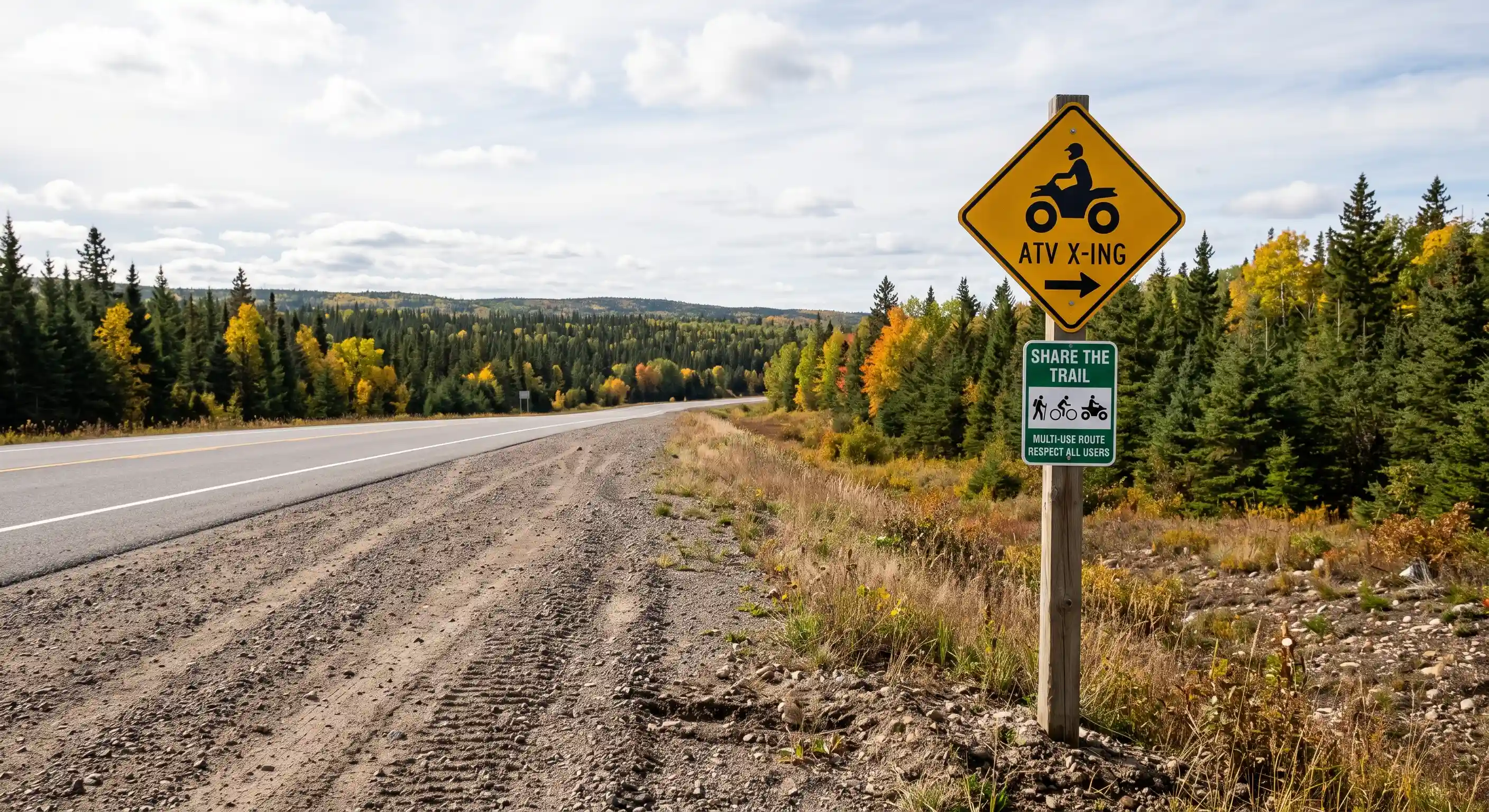
Why this is in the news right now: In January 2026, CBC reported that Prince Edward Island opened shared road access between ATV and snowmobile riders for the first time, through a new "Share the Road" pilot program covering routes into 12 municipalities. It is a small provincial change, but it highlights a much bigger pattern across the country, off-road vehicle law in Canada is a patchwork, not a system.Why This Actually Matters, Not Just Trivia
This is not a minor administrative detail. A separate CBC News investigation into Atlantic Canada's off-road vehicle deaths found that alcohol was involved in at least 41 percent of ATV and snowmobile fatalities in the region, and that most victims were middle-aged men. Doctors in Nova Scotia and New Brunswick went as far as signing an open letter after ATV injuries became the number one trauma-related reason for pediatric intensive care admissions at the Maritimes' only children's ICU in a single year.
Confusing, inconsistent rules do not cause crashes on their own, but they do mean many riders genuinely do not know what applies to them, especially when riding somewhere other than home, lending a machine to a visiting friend, or buying a used ATV in a different province than the one they plan to ride it in.
What Changes by Province: The Real Differences
The table below reflects confirmed rules from provincial government sources and RCMP public safety notices as of 2026. Regulations are updated periodically, so always confirm current requirements with your provincial transportation ministry before you ride, especially if you are travelling from out of province.
| Province | Helmet | Registration and Insurance | Notable rule |
|---|---|---|---|
| British Columbia | Mandatory on ATVs, snowmobiles and dirt bikes. Seatbelts mandatory on side by sides | ORV registration required through ICBC on Crown land | Riders 12 and older must carry photo ID. Road crossing only permitted at a safe 90-degree angle |
| Alberta | Mandatory | Registration required for off-road use | Minimum age to operate a snowmobile independently is generally 14 |
| Manitoba | Mandatory for all riders and passengers | Registration and plate required. Minimum $500,000 third-party liability insurance is mandatory | A working headlamp and taillamp are legally required equipment |
| Ontario | Mandatory | Registration required. OFSC-groomed trail system is one of the largest in the world | Crossing a public road requires the operator to be 16 or older with a valid G2, M2 or higher licence |
| New Brunswick | Mandatory for ATV and snowmobile riders | Registration and insurance mandatory on trails, except dirt bikes and dune buggies | Children as young as 6 may legally ride youth-sized ATVs under direct adult supervision |
| Nova Scotia | Mandatory | Registration required | One of the provinces highlighted in CBC's Atlantic ATV safety investigation |
| Prince Edward Island | Mandatory for ATVs. Not required for snowmobiles under current rules | Registration required through provincial ATV and snowmobile federations | New for 2026: a "Share the Road" pilot lets ATV and snowmobile riders use designated shared road routes into 12 municipalities, a first for the province |
| Newfoundland and Labrador | Mandatory for ATVs. Not required for snowmobiles | Registration required | Helmet exemptions apply in some northern Labrador communities |
What This Means If You Buy a Used ATV or UTV Out of Province
Cross-province buying is common on MudWheelz, a good machine in Alberta can be worth trailering home to Saskatchewan or BC. Before you do, confirm three things:
- Registration transfer. Most provinces require you to re-register an off-road vehicle once it is based in a new province, even if it was already registered elsewhere.
- Insurance minimums. A policy that satisfies one province's minimum liability requirement may not meet another's, Manitoba's $500,000 minimum is a useful example of how far these numbers can vary.
- Trail pass and club membership rules. Ontario's OFSC system, Quebec's trail networks, and most provincial ATV federations require a valid trail permit that is separate from vehicle registration itself.
If you are planning a purchase like this, get an insurance quote for the province where the machine will actually be ridden before you finalize anything, and consider a pre-purchase inspection regardless of where the seller is located.
Frequently Asked Questions
Are ATV helmet laws the same across Canada?
No. Helmets are mandatory for ATV riders in every Canadian province, but snowmobile helmet requirements vary. Newfoundland and Labrador and Prince Edward Island do not currently require helmets for snowmobile operators under all circumstances, while most other provinces do.
Do I need insurance to ride an ATV in Canada?
In most provinces, yes. Manitoba requires a minimum of $500,000 in third-party liability coverage, and New Brunswick requires registration and insurance for trail use except for dirt bikes and dune buggies. Requirements and minimum coverage amounts vary by province, so confirm the current minimum with your provincial insurer before riding.
What is Prince Edward Island's new ATV and snowmobile rule in 2026?
As reported by CBC News in January 2026, PEI launched a "Share the Road" pilot program that, for the first time, allows ATV and snowmobile riders to use certain designated public roads to access 12 municipalities across the Island.
Can I ride my ATV on a public road in Canada?
Generally no, except to cross the road at a safe angle where permitted by local rules, or on specific routes designated by a provincial or municipal program such as PEI's new shared road pilot. Ontario requires the operator to hold a valid driver's licence and be at least 16 to legally cross a public road.
Why are ATV and snowmobile crash rates a concern in Atlantic Canada specifically?
A CBC News investigation found that alcohol was a factor in at least 41 percent of Atlantic Canada's off-road vehicle deaths, and that ATV injuries were the leading trauma-related reason for pediatric ICU admission at the Maritimes' only children's hospital ICU in one recorded year, prompting an open letter from 15 doctors calling for stronger safety measures.
This article summarizes publicly reported provincial rules as of 2026 for general awareness. It is not legal advice, and off-road vehicle regulations change. Always confirm current requirements, including helmet, age, insurance and road-access rules, with your provincial transportation ministry or ATV federation before riding, especially outside your home province.